Blog Details
ADHD Routines: How to Build One That Survives Real Life


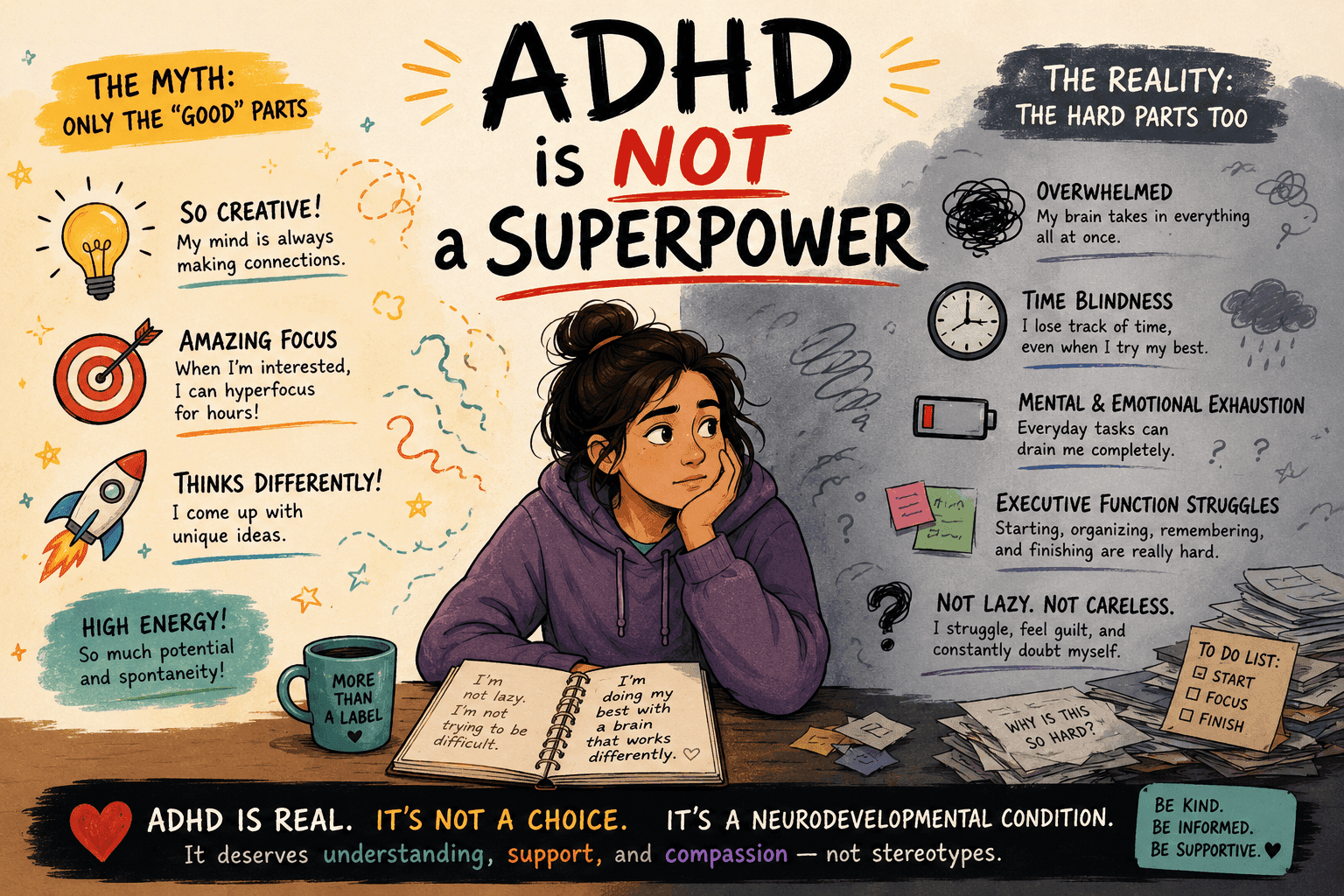
You've built ADHD routines before. Probably more than once. You found the perfect morning sequence, wrote it down, followed it for four days, and then one late night or one forgotten alarm blew the whole thing apart.
That's not a willpower problem. That's a design problem.
Most routine advice assumes your brain works like a conveyor belt. Task A leads to Task B leads to Task C. But ADHD brains don't run on conveyor belts. They run on momentum. And when momentum breaks, the routine doesn't pause. It collapses.
So the question isn't how to build a perfect daily routine for ADHD adults. The question is how to build one that doesn't fall apart the first time you oversleep.
Why ADHD Routines Break (It's Not What You Think)
The standard advice is to set a schedule and stick to it. Wake up at 6. Journal. Exercise. Eat. Work. Repeat.
That works for brains with reliable executive function. ADHD brains don't have that. Here's what actually happens:
You miss one step. Now you have to decide what to do next. That decision takes energy. The energy was already low because you're running late. So you skip the next step too. By 10am, the routine is gone and you're scrolling Reddit in your pants.
ADHD routines don't fail at the doing. They fail at the deciding. Every gap in the routine is a decision point. Every decision point is a place where your brain can stall.
The fewer decisions a routine requires, the longer it survives. That's the only rule that matters.
What Actually Makes an ADHD Daily Routine Stick
Forget the 17-step morning ritual. A daily routine for ADHD adults needs three things: fewer decisions, visible structure, and a way to recover.
Fewer decisions
Every choice you remove is friction you don't have to fight. Lay out clothes the night before. Eat the same breakfast. Automate the order of your tasks so you never have to ask "what's next?" The goal isn't rigidity. It's removing the deciding problem before it starts.
Visible structure
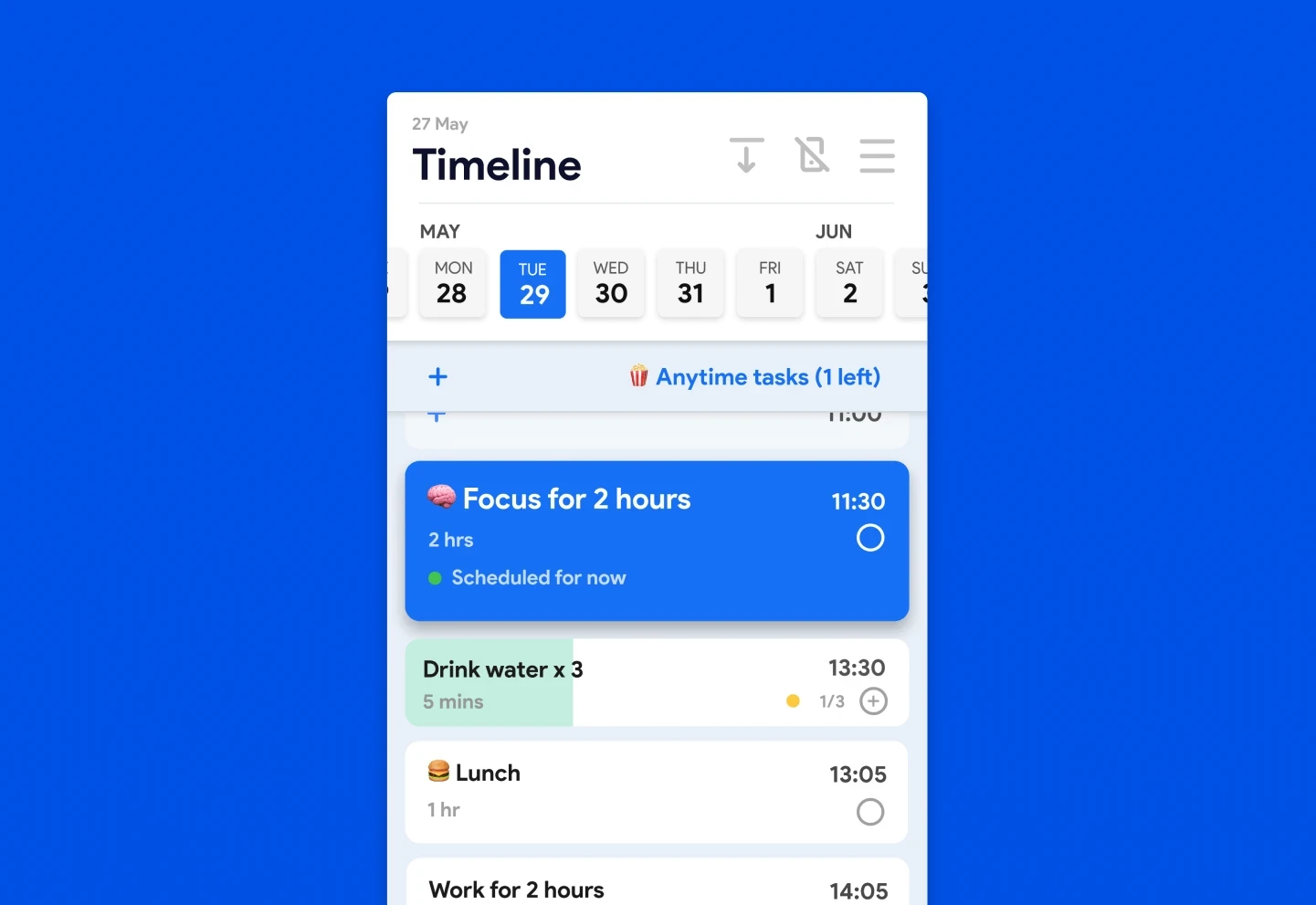
ADHD brains struggle with time blindness. If your routine lives only in your head, it doesn't exist. Put it somewhere you can see it. A time-blocked calendar, a visual planner, an app that shows your day as blocks of time. When you can see the shape of your day, you're less likely to lose it.
A recovery mechanic
This is the one nobody talks about. ADHD routines need a way to come back when they break. Not if. When. Because they will break. The question is whether the system rebuilds itself or whether you have to start from scratch every single time.
A routine that recovers is worth more than a perfect routine you abandon by Wednesday.
How to Build ADHD Routines That Actually Work
Here's the process. It's not complicated. The hard part is keeping it simple enough that your brain doesn't reject it.

Why Most ADHD Daily Routine Apps Miss the Point
There are dozens of ADHD daily routine apps. Most of them are glorified to-do lists with a timer stuck on top. They help you plan a perfect day. They do nothing when that day falls apart at 10:15am.
The gap isn't planning. ADHD brains can plan. The gap is what happens after the first interruption. That's where the deciding problem kicks in. Your plan is broken, you don't know what to do next, and the rest of the day slides into chaos.
Built for exactly that moment.
Yoodoo is a time-blocking planner that auto-reschedules your day when something goes wrong. Miss a block? Yoodoo shifts everything forward. No rebuilding. No deciding. You just look at the screen and do the next thing.
Built by an ADHD brain, for ADHD brains. Over 100,000 people use it.
ADHD Routines Don't Need to Be Perfect. They Need to Come Back.
None of this works perfectly. That's not the goal. The goal is having something to come back to when the day falls apart.
Most ADHD brains don't fail at doing. They fail at deciding what to do next. If you can remove that decision, the rest gets easier.
A system that recovers is worth more than a perfect plan you abandon by Tuesday.
Frequently Asked Questions
Why do ADHD routines fail?
ADHD routines fail because most routines require constant decisions about what comes next. When one step breaks, the brain stalls at the gap instead of continuing. Routines built with fewer decision points and automatic recovery last longer.
What is the best daily routine for ADHD adults?
The best daily routine for ADHD adults uses three anchor tasks, visible time blocks, and a recovery system. Start small. Three tasks, time blocked, with buffer between them. Add more only when the anchors are holding consistently.
Does time blocking work for ADHD routines?
Yes. Time blocking turns abstract plans into visible blocks, which helps with time blindness. The key is pairing time blocking with auto-rescheduling so missed blocks don't destroy the rest of your day.
What ADHD daily routine app actually helps?
Look for an ADHD daily routine app that reschedules your day when things go wrong, not just one that lets you plan. A planner that recovers automatically saves you from the deciding problem that kills most routines.
How do I stick to an ADHD routine long term?
Review weekly, not daily. Judge your routine every Sunday by whether the anchor tasks held most days. Adjust the anchors if they didn't. Don't add complexity until the basics are working. Recovery matters more than perfection.


Blog