Blog Details
ADHD Superpower or Curse? The Honest Truth

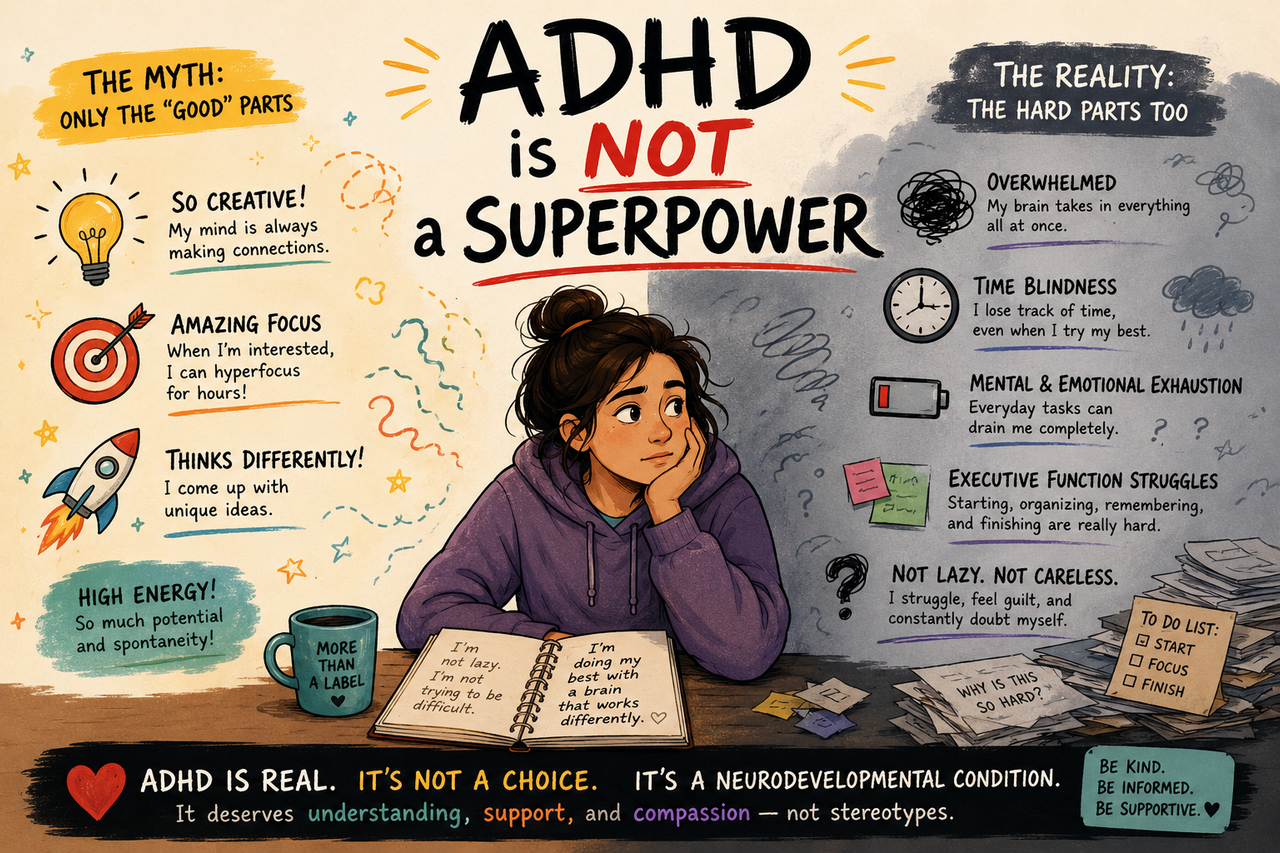
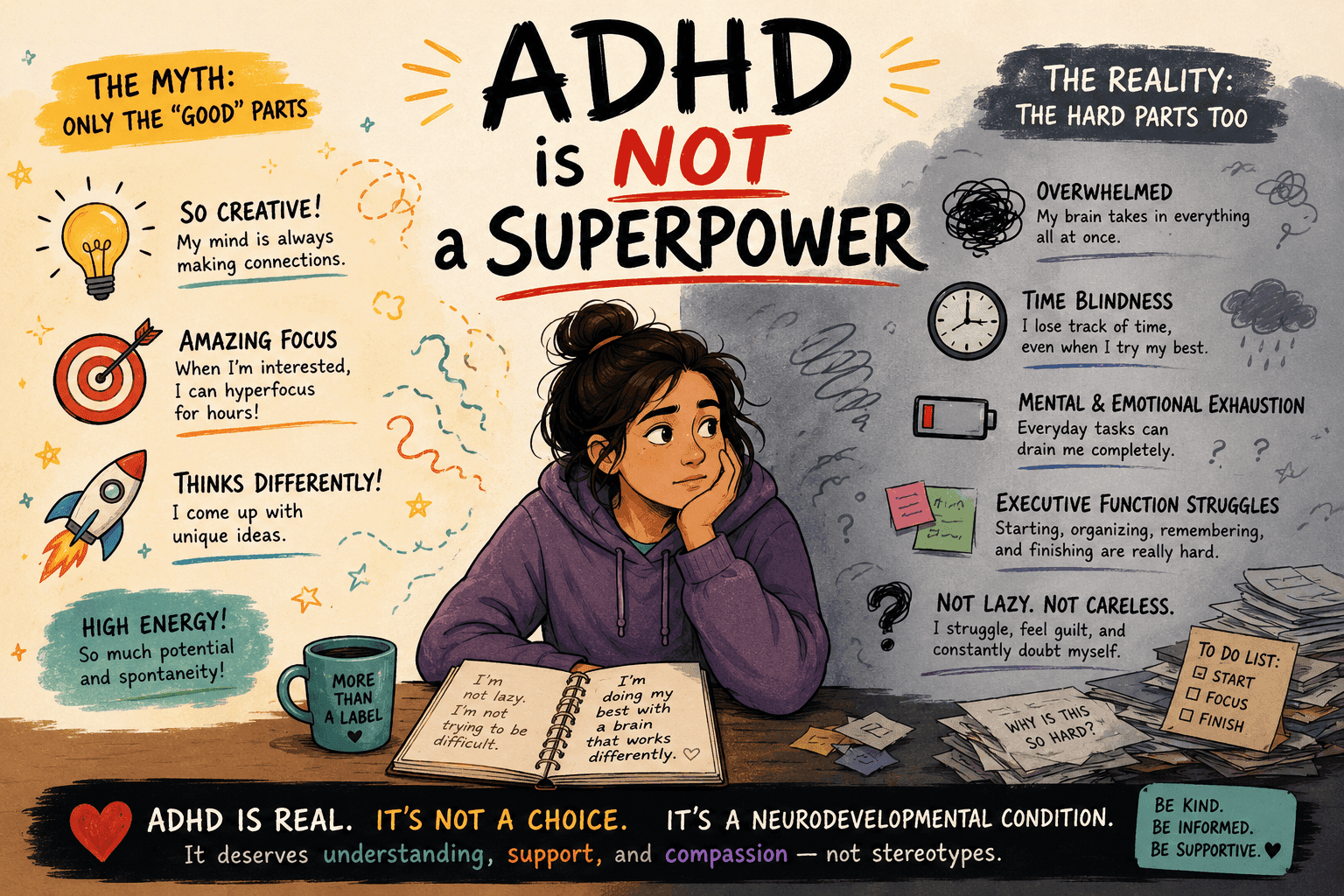
ADHD Is Not a Superpower. It's Not a Curse Either. Here's the Honest Truth.
When I got diagnosed with ADHD at 39, the first thing I fell into was the superpower narrative. You know the one. Elon Musk has it. Richard Branson has it. Your chaotic creativity is actually genius. You're not broken — you're gifted.
That felt incredible for about a week.
Then it didn't.
The superpower framing sounds empowering but often makes things worse. ADHD is a different operating system — not better, not worse. The goal is to understand how yours works and build real systems around it.
The Narrative That Broke Me
I'm not exaggerating when I say the superpower framing genuinely set me back. Because once you buy into it, every time you fail — and with ADHD, you fail often and in spectacular ways — you don't blame the narrative. You blame yourself. If this is supposed to be my gift, why can't I finish a single project? Why am I late to everything? Why does my kitchen look like that?
The superpower myth doesn't just fail to help. It actively creates shame.
According to many disability advocates, we cross a line from optimism to toxic positivity when we refer to ADHD as a superpower. By romanticizing real, life-altering symptoms as superpowers, we invalidate and diminish the struggles of so many children and adults already fighting hard against ADHD myths and stigma. The editors at ADDitude put it bluntly, and they're right.
Many people experience shame when they don't meet the "superpowered" ideal. For someone grappling with ADHD challenges, the "superpower" label can feel isolating rather than empowering.
That's exactly what happened to me. And I'd built Yoodoo years before I even knew I had ADHD — not because I was leaning into some superpower — but because I was desperate, struggling to function, and needed something that would actually work.
The Question Nobody Asks
The team at iterate ADHD nailed it with a question I've never been able to shake: if ADHD was such a "superpower," how and why did you end up seeking support for ADHD in the first place?
Seriously. Think about that.
Framing ADHD as a "superpower" is misleading and can be harmful: it fuels unrealistic expectations, invalidates real struggles, and can discourage people from seeking support.
I've spoken with thousands of people who use Yoodoo. They're not looking for validation of their genius. They're looking for help getting through a Tuesday. They want to stop losing hours to doom-scrolling when they meant to do the one thing that matters. They want to feel less like they're constantly letting themselves down.
Disability scholars and advocates argue that framing neurodivergence as a "superpower" can reinforce the notion that one must be exceptional to be valued or accepted. And that's where it gets genuinely damaging.
The superpower narrative of ADHD feels like a slippery slide into disability denial. ADHD is a disability, even if it isn't disabling to everyone who has it. Because why would someone full of superpowers and hidden strengths need accommodations, help, modifications, empathy?
That last sentence. Every time.
ADHD Is a Different Operating System
Here's the framing I've landed on, and the one that actually helps: ADHD is not a superpower. It's not a curse. It's a different operating system.
Not better. Not worse. Different.
Rather than framing ADHD as a "deficit" or "disorder" measured against neurotypicality as the ideal, it can be understood more neutrally as a difference. That's a recent perspective paper pushing for more neurodiversity-affirming language in clinical settings, and it's exactly right. The problem isn't your brain. The problem is that the world was built for a different brain.
ADHD may be less a broken brain than a context-mismatched one.
That reframe changed everything for me. I stopped trying to fix myself and started asking: what does my brain actually need to function well? What conditions let it fire on all cylinders? And crucially — what systems do I need to build to compensate for the things it does badly?
Now, I'm not going to pretend ADHD has no upsides. There are things my brain does that I genuinely wouldn't trade. The intensity when I'm locked in on something I care about. The ability to make connections that other people miss. The capacity to work in ways that look chaotic from the outside but produce real results.
It's easy to see how so many of us swing from one extreme — "ADHD is a flaw" — to the other — "ADHD is a superpower." But the real answer isn't in either extreme; it's a sweet spot in the middle. Where ADHD isn't all negative, but it's not all positive either. It just…is.
The Two Things That Are Both True
ADHD brings real challenges — executive function gaps, time blindness, emotional reactivity, rejection sensitivity — that do not disappear because you have reframed them. A balanced perspective insists on both sides of the ledger. You can need medication, coaching, or accommodations and still have a brain whose strengths the world genuinely needs. Both statements are true. Living well with ADHD means refusing to choose between them.
That's the honest version. Not "your chaos is actually brilliance in disguise." Not "you're broken and need fixing." Both. At the same time.
So What Do You Do With That?
You build systems.
Not willpower. Not motivation. Not a better attitude. Systems. External scaffolding that does the cognitive work your brain struggles with automatically.
That's the whole reason Yoodoo exists. I built it before I knew I had ADHD, because I was trying to solve my own problems — struggling to get through a workday without losing three hours to nothing, unable to figure out why I could crush it one week and completely collapse the next. I was building a structure for my brain without yet knowing why my brain needed it.
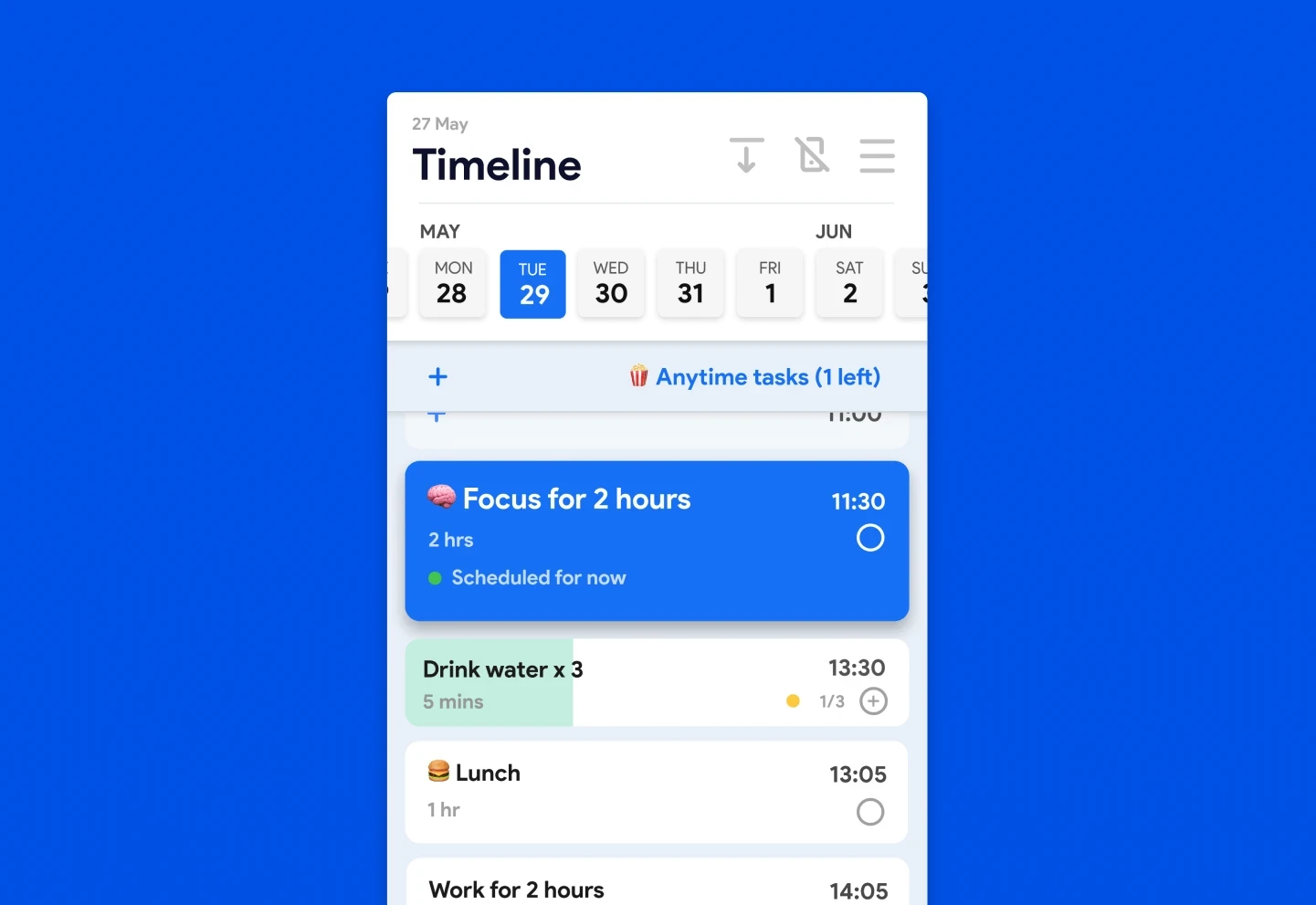
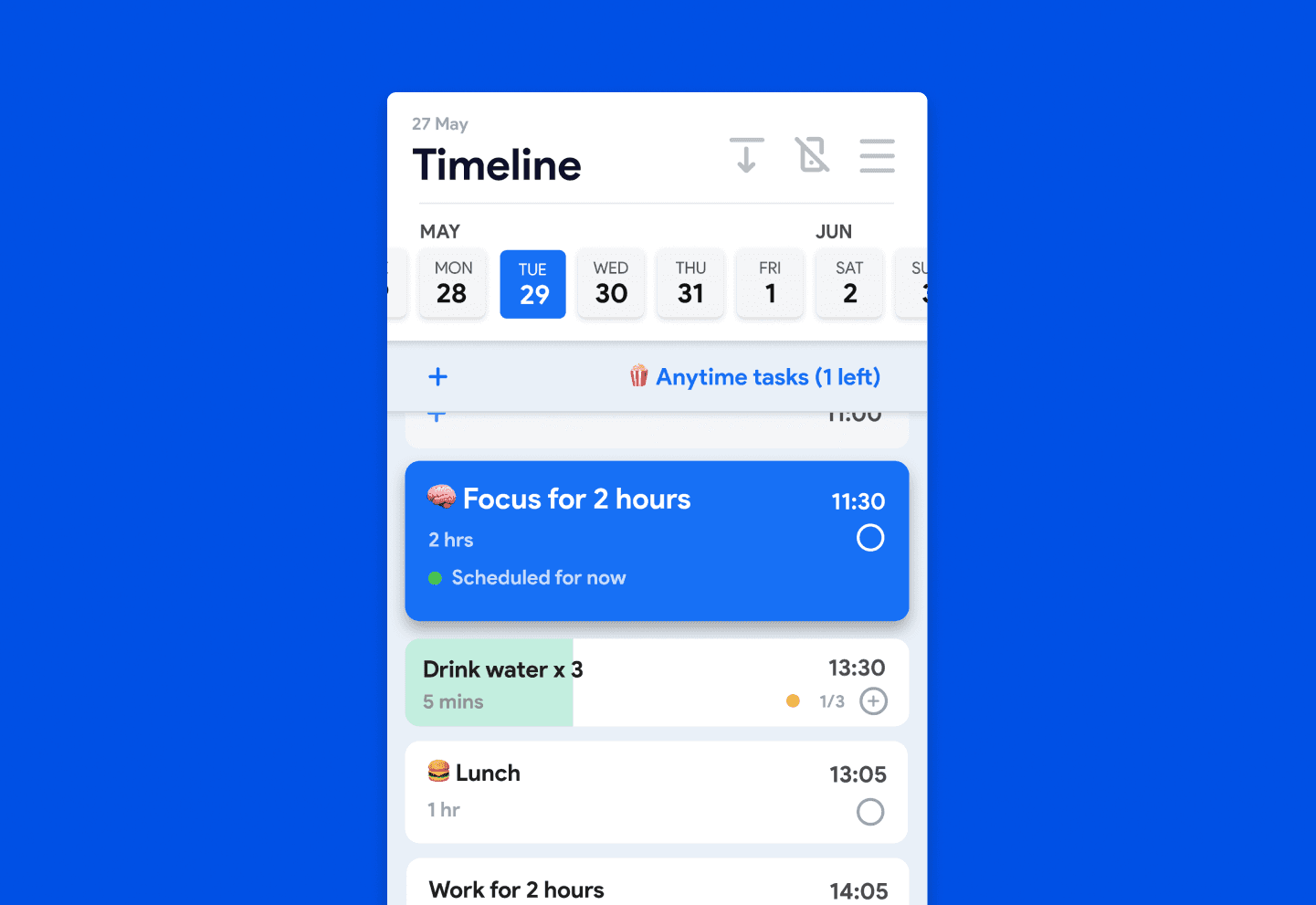
Yoodoo is a time-blocking app built specifically for how ADHD brains actually operate. Not how productivity gurus say they should. Not how a neurotypical calendar assumes they do. How they actually do. The time-blindness. The task paralysis. The tendency to lose the entire afternoon when one thing goes wrong. The app autoschedules, blocks distracting apps, runs focused work sessions, and helps you build the kind of consistent habits that your brain won't just maintain on willpower alone. Over 100,000 people use it. Most of them tried everything else first.
The point isn't that Yoodoo solves ADHD. Nothing "solves" ADHD, and anyone telling you otherwise is selling something. The point is that your brain needs different tools than a neurotypical brain. A time-blocking system designed for the way ADHD brains experience time is a fundamentally different thing from a standard calendar. Same way a Mac and a PC can run similar software but need different drivers.
Different operating system. Different tools.
Where to Actually Start
If you're newly diagnosed or stuck in the cycle of trying things and failing, here's the honest place to start. Stop trying to inspire yourself into productivity. Stop waiting to feel motivated.
The superpower message suggests you should naturally excel or find your ADHD advantageous. When this doesn't happen, you might blame yourself rather than recognising that success with ADHD requires specific strategies and support.
It requires specific strategies and support. Full stop.
Learn how your brain works. Build systems around that reality. Ditch the stuff that doesn't work and stop feeling guilty about it. If you want a starting point for understanding your particular flavour of ADHD brain and what structure might actually help, the Yoodoo brain type quiz is worth five minutes of your time.
And if you want to build a proper routine that doesn't fall apart the second life gets complicated, we've written the honest guide to ADHD routines here.
This isn't about becoming someone else. It's about figuring out who you actually are, how your brain actually runs, and building a life that works with it instead of fighting it constantly.
That's the goal. Not a superpower. Just function. And honestly? Function feels better than the fantasy ever did.
Ready to build systems that actually work for your brain?
Built by an ADHD brain, for ADHD brains. Over 100,000 people use it.
Try Yoodoo free Free to start. No credit card.FAQ
Is ADHD actually a superpower?
No — and the framing does more harm than good for most people. While ADHD does come with some genuine strengths for some people in some contexts, calling it a superpower oversimplifies a genuinely complex condition. It also tends to create shame when people can't live up to the superhuman expectation, and can discourage people from seeking the support they actually need.
Why is the ADHD superpower narrative harmful?
Because it's toxic positivity dressed up as empowerment. When you're told your ADHD is a gift and you're still struggling to get through a basic week, you don't question the narrative — you question yourself. Disability advocates and researchers have been pointing out for years that romanticising real symptoms invalidates the genuine struggles of people living with ADHD every day.
What's a better way to think about ADHD?
A different operating system is the most useful framing. Not better, not worse — different. Your brain has genuine challenges and genuine strengths. The goal isn't to celebrate or deny either. It's to understand how your brain actually works and build the right systems around that reality.
What kind of systems actually help ADHD brains?
External scaffolding that removes the need to rely on willpower and memory. Time-blocking (so you're not constantly making decisions about what to do next), focused work sessions with built-in breaks, app blockers to reduce friction with distraction, and habit-building tools designed for brains that don't just pick up routines automatically. These are the core tools in Yoodoo — built specifically because generic productivity apps don't account for time blindness, task paralysis, or how ADHD brains actually experience a day.
I was just diagnosed as an adult. Where do I even start?
Start with understanding, not fixing. Learn how your specific brain tends to operate — where it thrives, where it collapses, and why. Then build one system at a time. The Yoodoo brain type quiz is a good place to start, and our guide to ADHD routines covers how to build structure that actually survives contact with real life.


Blog