Blog Details
Body Doubling for ADHD: Why It Works (The Science)


Body doubling isn't a weird hack or a crutch. It's a neurologically sound strategy that gives your ADHD brain the external structure it genuinely cannot generate on its own. Here's the science behind why it works — and how to use it.
You ever notice how you can sit alone for three hours achieving absolutely nothing, then someone sits down next to you and suddenly you're productive? That's not a coincidence. It's not discipline kicking in. It's your brain finally getting what it actually needs.
This phenomenon has a name: body doubling.
It's when you work or do tasks alongside another person — either in person or online — to help stay focused and motivated. You set aside time to do a specific task while in the presence of another person.
The other person doesn't help. They don't coach you. They just exist nearby.
And somehow, that's enough.
I spent years thinking I was lazy. Turns out my brain just needed a different setup. Once I understood the neuroscience behind why, everything clicked. So let me break it down for you.
Your Brain Isn't Broken. It's Under-Regulated.
Before we get into body doubling specifically, you need to understand one thing about ADHD that most people still get wrong.
It is not an attention disorder. Not really.
Russell Barkley's influential model argues that ADHD fundamentally reflects a disruption in self-control mechanisms rather than attention per se. ADHD is increasingly conceptualised not simply as a deficit of attention, but as a disorder of behavioral inhibition and self-regulation.
That's a massive distinction.
Barkley has argued that ADHD is fundamentally a problem of self-regulation, not knowledge. People with ADHD know what to do. They struggle to make themselves do it without external structure.
Read that again. You know what you need to do. The problem isn't information or intelligence or work ethic. It's activation. It's the gap between knowing and doing.
Many adults describe the experience as: "I know what I need to do. I just can't get myself to start." This is not a failure of knowledge. It is a difficulty with activation and sustained effort over time.
So what fixes an activation problem? More willpower? More guilt? No. External structure.
One of Barkley's central clinical recommendations is the externalization of executive functions — moving regulatory demands out of the mind and into the environment.
Body doubling is exactly that. It's not cheating. It's the correct solution for the actual problem.
The Neuroscience: What's Actually Happening in Your Brain
Social presence activates your dopamine reward circuit
Here's where it gets really interesting. When another person is in the room, your brain doesn't just notice it and move on. It responds to it chemically.
The dopaminergic reward circuitry is engaged during social behaviours. Dopamine is involved in the prediction and mediation of rewarding stimuli, whereas successful social interactions comprise some of the most potent rewarding stimuli for human beings.
Research by Kopec, Smith and Bilbo (2019, published in Trends in Neuroscience) demonstrated the link between social behaviour and dopaminergic signalling — specifically how social context engages the brain's reward and motivation pathways.
For an ADHD brain, which already runs low on dopamine in the regions responsible for attention and task initiation, this matters enormously. People with ADHD have reduced dopamine levels in brain regions responsible for attention and impulse control. Social presence gives those pathways a nudge. Not a massive hit — just enough to lower the activation threshold. Enough to make starting feel possible instead of impossible.
Mirror neurons and the pull of purposeful action
There's another mechanism running underneath all of this, and it's fascinating.
In the 1990s, neuroscientist Giacomo Rizzolatti and his team at the University of Parma discovered a class of neurons that do something extraordinary. Mirror neurons are motor neurons that discharge both when an individual performs a given motor act and when they observe another individual performing the same act.
Whenever individuals observe an action being done by someone else, a set of neurons that code for that action is activated in the observers' motor system. Since the observers are aware of the outcome of their motor acts, they also understand what the other individual is doing without the need for intermediate cognitive mediation.
In plain terms: watching someone work activates the part of your brain that does the working. Observing another perform an action increases the neurocircuitry for that action in the observer. So when your body double is sitting there quietly typing or folding laundry, your premotor cortex is quietly humming along with them. Your brain gets primed for action simply by witnessing someone else in action. That's not willpower. That's biology.
Social facilitation: the oldest productivity research there is
Body doubling draws on social facilitation theory, first proposed by psychologist Norman Triplett in 1898. This theory suggests that people perform better on simple or well-practiced tasks when in the presence of others.
This has been replicated so many times across so many contexts it's basically bedrock. Psychologists have long documented the "social facilitation effect," where performance improves simply because another person is present. For ADHD, this effect helps bypass the brain's resistance to starting. Instead of expending all your willpower to initiate a task, the presence of another person lowers the activation barrier.
And here's the thing about ADHD brains specifically. Most tasks that ADHD makes hard — cleaning, emails, paperwork, studying — aren't cognitively complex. They're boring. They require sustained effort on routine actions. These are exactly the types of tasks where social facilitation predicts a performance boost.
External Executive Functioning: Borrowing the Structure Your Brain Can't Build
Cleveland Clinic's psychologist Dr. Michael Manos has the best framing I've seen for what body doubling actually is. It's a form of external executive functioning — when you work or do tasks alongside another person to help stay focused and motivated. He puts it this way:
"Essentially it's external executive functioning, like having an administrative assistant follow you around all day."
That's it. That's the whole thing.
Your ADHD brain struggles to self-regulate, self-initiate and sustain attention from the inside. So you build the scaffolding on the outside. Another person's calm, focused presence does for your nervous system what your prefrontal cortex is supposed to do but can't always do reliably.
Interpersonal neurobiology research emphasises that humans regulate one another's nervous systems through relational presence. Sitting near a calm, focused individual may stabilise arousal and reduce avoidance behaviours, making sustained effort more accessible.
Researchers and clinicians describe body doubling as "borrowing" structure from the environment when your brain is struggling to self-generate it.
That reframe matters. Because a lot of us walk around feeling like we should be able to do this alone. We can't. And that's not a character flaw — it's a neurological reality.
It is not a crutch. It is a bridge over a neurological gap.
How to Actually Use This (Practically)
Body doubling is more flexible than most people think. The classic version is sitting next to someone while you both work on separate things. But the research suggests the presence doesn't even need to be physical.
Body doubling involves the physical presence, or virtual presence through a phone call, video call or social media presence, of someone with whom one shares their goals — which makes it more likely to achieve them. Plenty of people in the Yoodoo community do this over FaceTime, on Discord, or in dedicated virtual coworking spaces.
What actually makes it work well
A few things make the difference between a useful session and one that just dissolves into conversation:
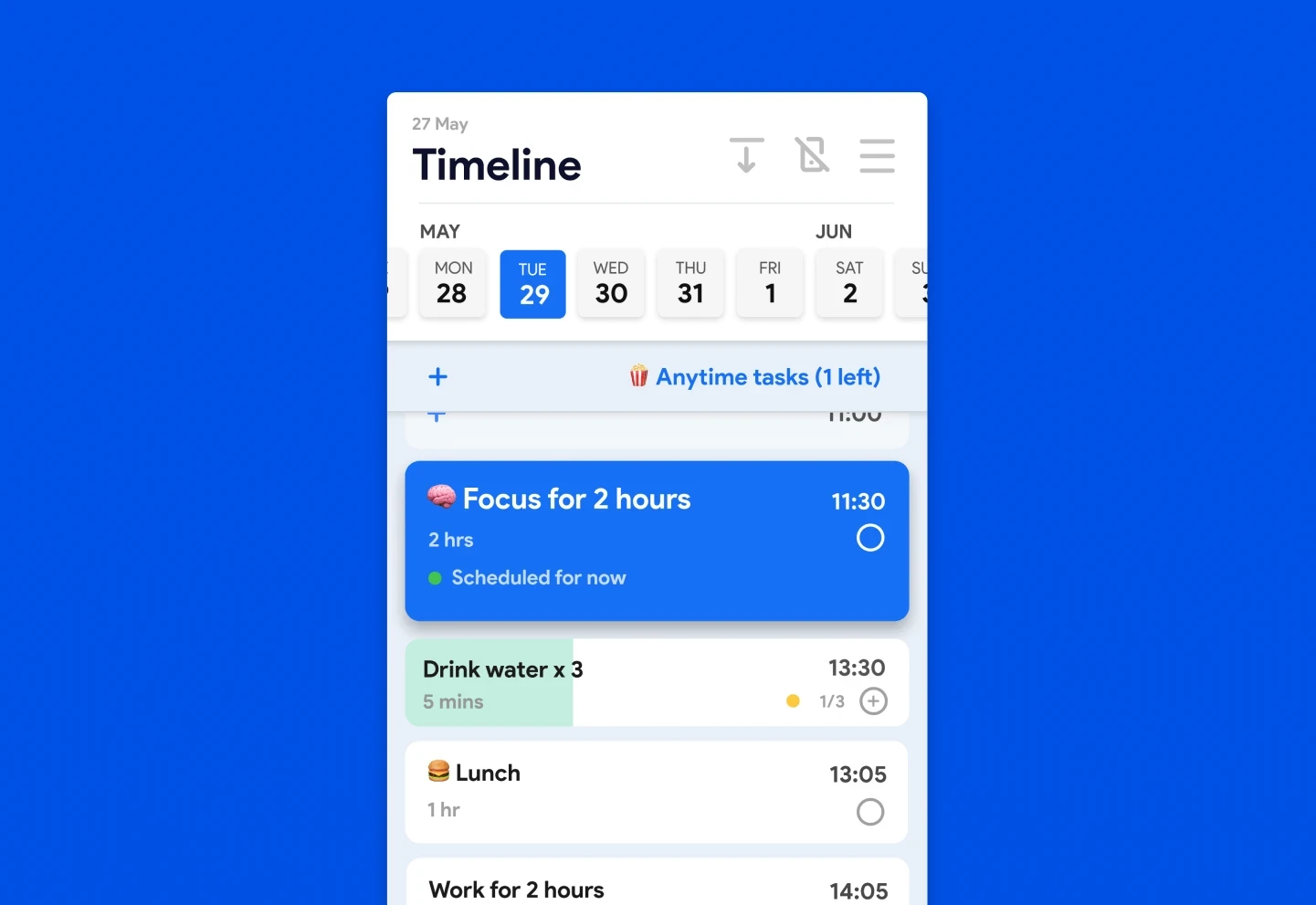
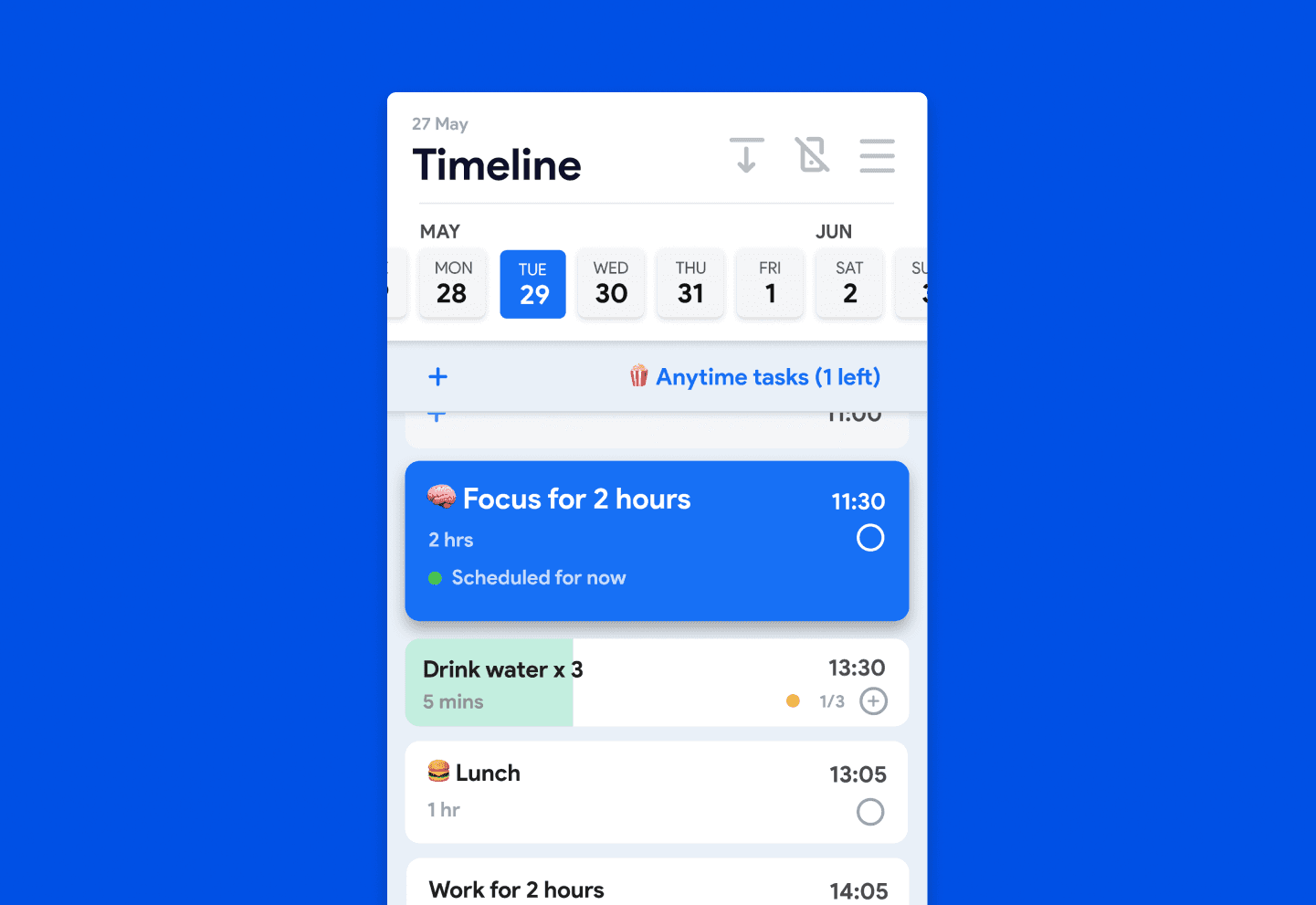
State your intention before you start. "I'm going to work on this report for 45 minutes." Say it out loud. That micro-commitment changes things. Then use a structured work period so you're not just floating in open time. The Yoodoo focus timer pairs naturally with body doubling sessions — it gives you a defined container with a clear start and end, so the social accountability has something to anchor to. Without that structure, even a body doubling session can drift.
The combination of a focused timer running and someone present is genuinely powerful. It covers both the social activation piece and the time-container piece. Two of the biggest starting problems sorted at once.
A 2023 survey published by ACM studied 220 people — 193 of whom identified as neurodivergent — and found that participants used body doubling overwhelmingly to initiate tasks, stay motivated during tasks, and complete tasks. Those aren't subtle gains. That's the difference between a day where things get done and one where they don't.
The bottom line: your brain isn't broken. It just operates differently.
A neurotypical brain generates its own activation signal. An ADHD brain needs an external trigger. Body doubling provides that trigger through social presence, dopamine, and co-regulation.
Now you know why. Use it.
Ready to work with your brain, not against it?
Built by an ADHD brain, for ADHD brains. Over 100,000 people use it.
Try Yoodoo freeFAQ
Body doubling means working alongside another person — either in person or virtually — while you each focus on your own tasks. You don't need them to help you with the work itself. Their presence alone is doing the work neurologically.
Virtual works. It can involve virtual presence through a phone call, video call or social media presence. For some people it works best to both do similar tasks, while for others, just being in the same virtual room is enough. Platforms like Focusmate are built around this. So is working at a café, even surrounded by strangers.
No. Body doubling is sometimes misunderstood as reliance. From a neuropsychological perspective, it represents adaptive strategy use. You wouldn't tell someone who uses glasses that they're avoiding learning to see better unaided. External tools for real neurological differences aren't a crutch — they're just good strategy.
Because at a café, everyone around you is body doubling you without knowing it. The presence of another person compensates for the internal executive function deficits that ADHD creates, particularly around task initiation and sustained effort. At home alone, there's no social signal to activate your dopamine system and prime your mirror neurons. The café isn't a nicer place to work. It's a neurologically different environment.
You have more options than you think. Virtual coworking platforms, YouTube "study with me" videos, or even working on a video call with a friend on mute all count. Pair any of these with the Yoodoo focus timer and you've got a low-effort, high-impact setup that works with how your brain actually functions. And if you want a deeper look at building structure around your ADHD brain, the Yoodoo brain type quiz is a good place to start figuring out what your specific setup should look like.


Blog