Blog Details
ADHD Motivation Without Meds: 7 Science-Backed Strategies


Only about a third of people with ADHD are on medication. And even if you are, the pills wear off at 4pm. Here are seven things backed by real science that actually move the needle on ADHD motivation — no prescription required.
Let's start with a number that surprises most people.
Approximately 35% of individuals with an ADHD diagnosis received stimulant medication in 2022–2023. That's it. Fewer than one in three. Which means the majority of people diagnosed with ADHD are navigating this every day without pharmaceutical help. And even those who are medicated know what it's like when the dose wears off, when there's a shortage, or when they just don't want to take it that day.
Medication isn't the whole story. It never was.
There's also a more interesting reason to pay attention here. A landmark study from Washington University School of Medicine analysed brain scans from nearly 12,000 children and found something that's been reshaping how clinicians think about this.
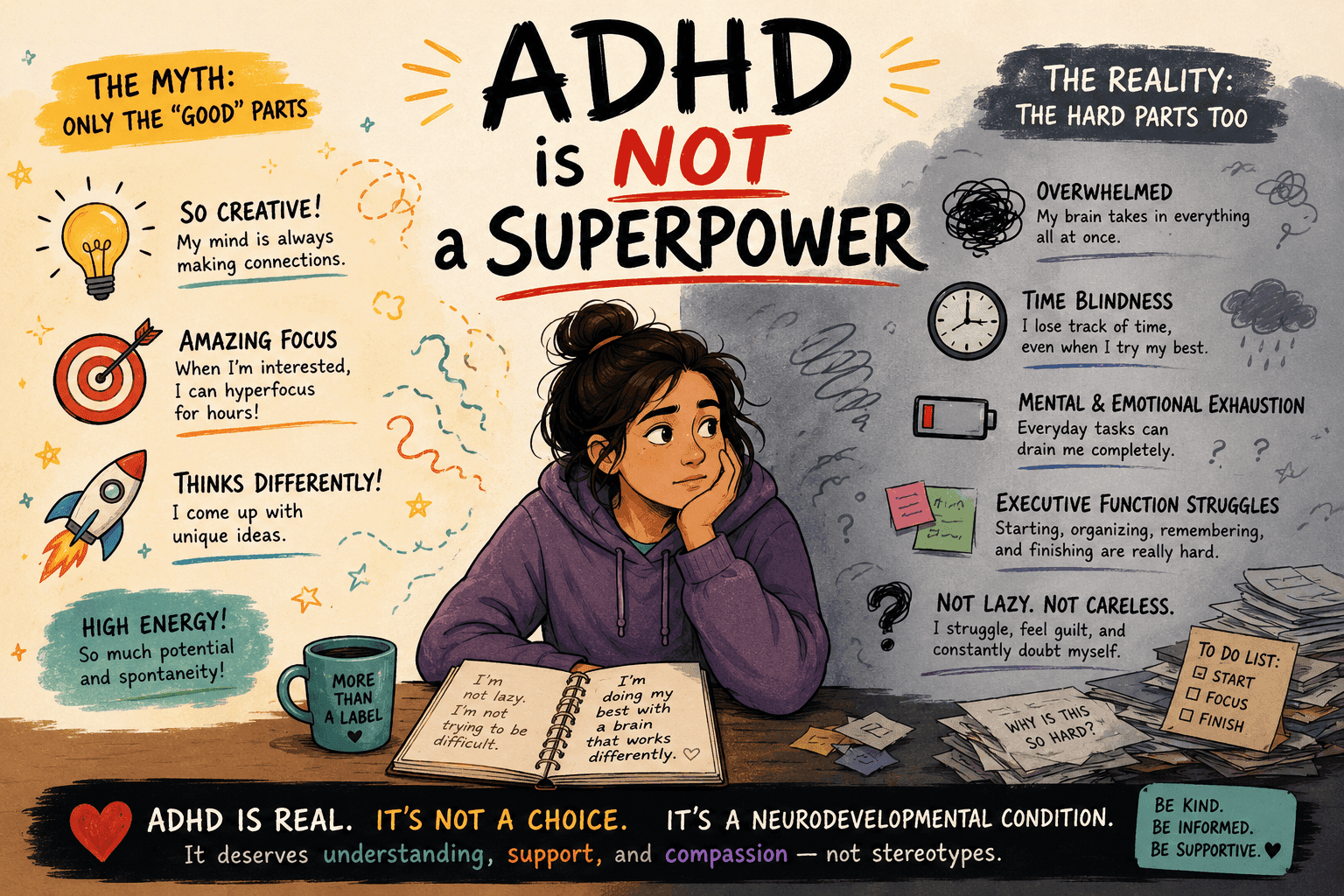
The researchers found that stimulant medications produced patterns of brain activity that mimicked the effect of good sleep, negating the effects of sleep deprivation on brain activity. In other words, what meds are doing in a large part is restoring arousal and reward states — not magically unlocking an attention superpower. That's actually good news. Because you can influence arousal and reward states without a pill.
Here's what actually works.
1. Remove the Decision Cost: Time-Blocking
The biggest motivation killer for ADHD brains isn't laziness. It's the moment you look at your day and think, "where do I even start?" That decision fatigue is real, and it costs you before you've done a single thing.
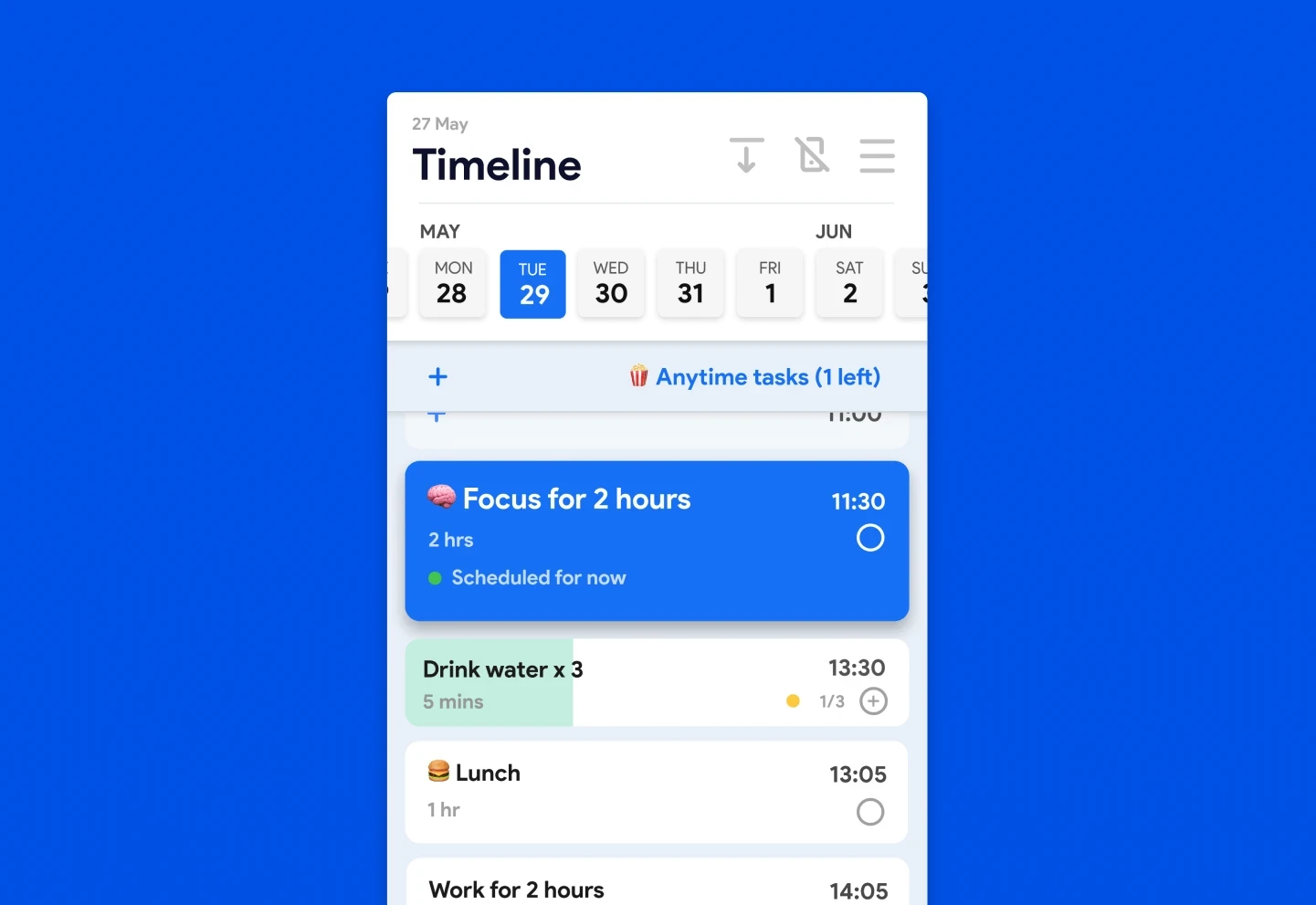
Time-blocking fixes this by converting a pile of tasks into a pre-made sequence of decisions. You don't decide what to do next. You already decided. The block tells you. For ADHD brains, this is massive. Executive function is the bottleneck — not effort, not intelligence — and removing micro-decisions conserves it for the work itself.
This is literally what I built Yoodoo for. Not because I read a productivity book. Because I was drowning without it and needed a system that could survive actual ADHD chaos — including when plans fall apart. The auto-reschedule feature exists for exactly that reason. Check out the time-blocking tutorial if you want to see how it works in practice.
Apps like TickTick or Todoist are fine task lists, but they don't solve the ADHD-specific problem. They give you more things to look at and decide about. That's the opposite of what we need.
2. Use Behavioural Incentives — They Work Like Medication on Your Brain
This one comes with proper neuroscience behind it.
Researchers from the University of Nottingham's MIDAS study showed that medication has the most significant effect on brain function in children with ADHD, but this effect can be boosted by complementary use of rewards and incentives, which appear to mimic the effects of medication on brain systems.
Read that again. Behavioural incentives mimic medication on brain systems. That's not self-help fluff. That's EEG data.
Researchers found that children with ADHD require much greater incentives — or their usual stimulant medication — to focus on a task. When the incentive was low, the children with ADHD failed to switch off brain regions involved in mind-wandering. When the incentive was high, or when they were taking their medication, their brain activity was indistinguishable from that of a typically developing child.
The catch the Nottingham team also flagged: ADHD brains are particularly bad at delayed rewards. Future-you getting a bonus next month does nothing for present-you trying to write an email now. The reward has to be immediate and real. Think: five minutes of something you actually enjoy, right after the task. Stack it onto the block. Make the incentive visible before you start.
Reward Stacking in Practice
Don't wait until the project is done to reward yourself. Break the task into chunks and attach a small immediate payoff to each one. Finished the draft? Coffee and ten minutes of nothing. That's not procrastination. That's neurochemistry.
3. External Accountability
Left alone with a task, the ADHD brain will often find something more interesting to do with the next four hours. This isn't a character flaw. It's a dopamine availability issue. Other people change that equation fast.
Tell someone what you're doing before you start. Text a friend. Post in an accountability group. Even a vague social contract ("I'm going to get this done by 2pm") creates enough external pressure to get the engine running. This works because social stakes are immediate — the embarrassment of failing to follow through is a real, present consequence. That's the kind of motivation ADHD brains can actually use.
4. Body Doubling
Body doubling is just working in the presence of another person. A café. A library. A Zoom call where you're both just silently doing your own work. It sounds too simple to actually do anything, but it is remarkably effective for a lot of ADHD brains.
The theory is that having someone else in proximity activates a low-level social awareness that keeps the brain just engaged enough to stay on task. You're not explaining what you're doing. You're not asking for feedback. You're just not alone with your wandering mind. Virtual body doubling tools like Focusmate have built entire communities around this, and they work. Worth trying before you write it off.
5. Environmental Design: Engineer Your Context
If your environment makes the wrong thing easy, you'll do the wrong thing. Every time. You don't beat that with willpower. You beat it by changing the environment.
What does that look like practically? Put your phone in another room during focus blocks. Remove browser tabs you know you'll fall into. Create a specific physical setup that you only use for focused work — even if it's just moving to a different chair. The more your environment signals "this is work time," the less your brain has to fight the context switch.
App blocking is one of the highest-leverage moves here. The moment you remove the option, you remove the decision. Yoodoo's app blocker does this automatically during your focus blocks. You don't have to wrestle with yourself. It's already done.
Notion and Todoist don't do this at all, which is fine — they're not ADHD tools. They're organisation tools. Different problem.
6. Focus Timers: Give the Task a Wall
Open-ended work is brutal for ADHD. "Work on this until it's done" is not a viable instruction for a brain that struggles with time blindness. A timer changes the game because it creates a defined endpoint. Suddenly the task isn't infinite. It's 25 minutes.
Pomodoro-style timers work well for a lot of people with ADHD, but the specific interval matters less than the act of making time concrete. Set a timer. Work only until it goes off. Then actually stop. The discipline is in the stopping as much as the starting — it trains your brain that the deal is real, which makes it easier to start next time.
7. Sleep: The Non-Negotiable Underdog
This one doesn't get enough credit in ADHD conversations, and the Washington University research makes it impossible to ignore.
Some of the benefits of stimulants could also be attained by getting sufficient sleep each night, something about half of children and adults go without.
ADHD medications do not raise cognitive ceilings; instead, they compensate for deficits in arousal, motivation, or sleep. Their effects resemble "being well-rested," not "being smarter." These medications help individuals do what they already can do — but struggle to do under suboptimal conditions — rather than granting new cognitive abilities.
So if you're sleeping five hours and wondering why nothing's working — that's a huge part of your problem. Not the only part. But a real part. Protecting sleep isn't a lifestyle preference for ADHD brains. It's infrastructure.
This is also where habit tracking earns its keep. Sleep consistency — same bedtime, same wake time — is one of the highest-impact habits you can build. Small habit, enormous downstream effect.
None of these things are magic. None of them replace medication if medication works for you. But the research is clear: ADHD brains can be moved. Reward, structure, sleep, environment — these aren't workarounds. They're the actual levers. You just have to pull them deliberately, not hope they happen by accident.
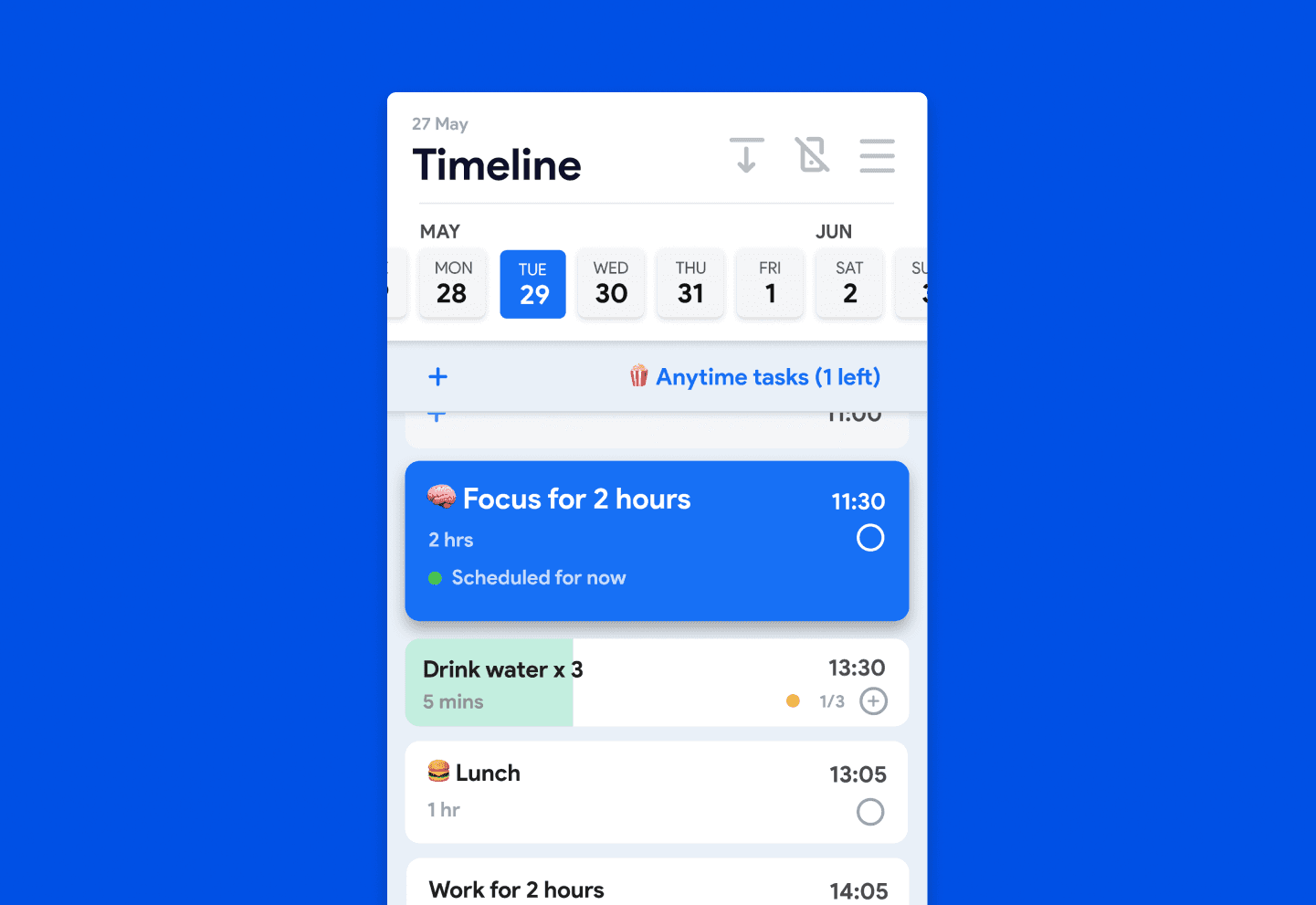
If you want to see what a proper ADHD-specific system looks like in practice, Yoodoo was built around all of this — not as a task list, but as a motivation scaffold. Take the brain type quiz to get a setup that fits your specific pattern.
Ready to try a system built for your brain?
Built by an ADHD brain, for ADHD brains. Over 100,000 people use it.
Try Yoodoo freeFAQ
Does time-blocking actually work for ADHD, or do I just miss every block?
Missing blocks is normal and expected — especially early on. The key is auto-rescheduling rather than abandoning the system when it breaks. A rigid schedule that doesn't flex will fail. A flexible one that adjusts keeps you anchored. That's specifically what we built into Yoodoo, and it's the thing that separates it from just putting tasks in a calendar.
Why do I feel totally unmotivated even when I'm on medication?
A few reasons. Stimulants wear off — usually after six to eight hours. They also primarily affect arousal and reward circuitry rather than directly wiring in attention, so if your environment is wrong, your sleep is bad, or you're being asked to do something with zero personal relevance, meds alone won't save you. The behavioural levers above are especially important for filling that gap.
Is body doubling just an excuse to sit near other people and do nothing?
It's not — but only if you treat it like a real accountability structure. "Working in a café" only counts if you actually work. Focusmate works well because there's a social contract: you show up, you say what you're doing, you do it. The structure matters as much as the presence.
What if I don't have ADHD but struggle with motivation too?
A lot of these strategies work for anyone with an inconsistent motivation system. But the specificity matters. ADHD isn't just "low motivation" — it's a reward processing and executive function difference that means generic productivity advice often fails. The dopamine system works differently. If the standard advice has never worked for you, that's worth paying attention to. The brain type quiz might help you work out what kind of system actually fits your brain.
I've tried routines before and they've always fallen apart. Why would this be different?
Because most routine advice is built for neurotypical brains. It assumes you'll remember, want to start, and feel naturally bad when you skip. ADHD brains don't work that way. The routines that survive are ones with visible reminders, immediate low-stakes entry points, and built-in recovery when they break. Read more on how to build an ADHD routine that actually survives real life — this is the stuff that makes the difference.


Blog